
Defense of Gun and Weapons Charges Under Maryland Law
Firearms and Weapons Charges in Maryland
Firearms and weapons charges in Maryland can arise from a traffic stop, vehicle search, search warrant, arrest, or other police investigation. The discovery of a firearm does not end the legal analysis. The State must still prove the elements of the particular offense charged and establish that the defendant possessed the weapon when possession is an element of the offense.
Possession can become a significant issue when a firearm is recovered from a vehicle, residence, bag, or other location accessible to more than one person. The defense should examine where the firearm was found, who had access to it, whether the defendant knew it was present, and what evidence actually connects the defendant to the weapon.
The manner in which police discovered and seized the firearm can be equally important. A defense may require examination of the initial traffic stop or detention, probable cause, alleged consent, a vehicle or container search, a search warrant, an arrest, or another asserted justification for the seizure.
Physical and forensic evidence should also be evaluated carefully. DNA, fingerprints, body-worn camera footage, statements, photographs, location evidence, and other evidence may be relevant—but the existence of forensic evidence does not necessarily answer when, how, or under what circumstances a person allegedly possessed a firearm.
Challenging the Evidence in Maryland Firearms Case
A firearms defense begins with the particular offense charged and the evidence the State relies upon to connect the defendant to the weapon. The fact that a firearm was recovered does not, by itself, establish who possessed it or whether the possession violated Maryland law.
When a firearm is found in a vehicle, residence, bag, or other shared location, the defense should examine knowledge, access, proximity, ownership or control of the location, statements attributed to the occupants, and other evidence the State may rely upon to establish actual or constructive possession.
The legality of the police investigation may also be critical. A firearm recovered after a traffic stop may require examination of the basis for the stop, the duration and scope of the detention, any order to exit the vehicle, the seizure or search of a person or container, alleged consent, probable cause, and any other justification asserted for the search.
Firearm cases may also involve search warrants, statements or interrogations, DNA or fingerprint evidence, body-worn camera footage, surveillance video, photographs, digital evidence, and expert testimony. Each item should be examined for what it actually proves—and what it does not.
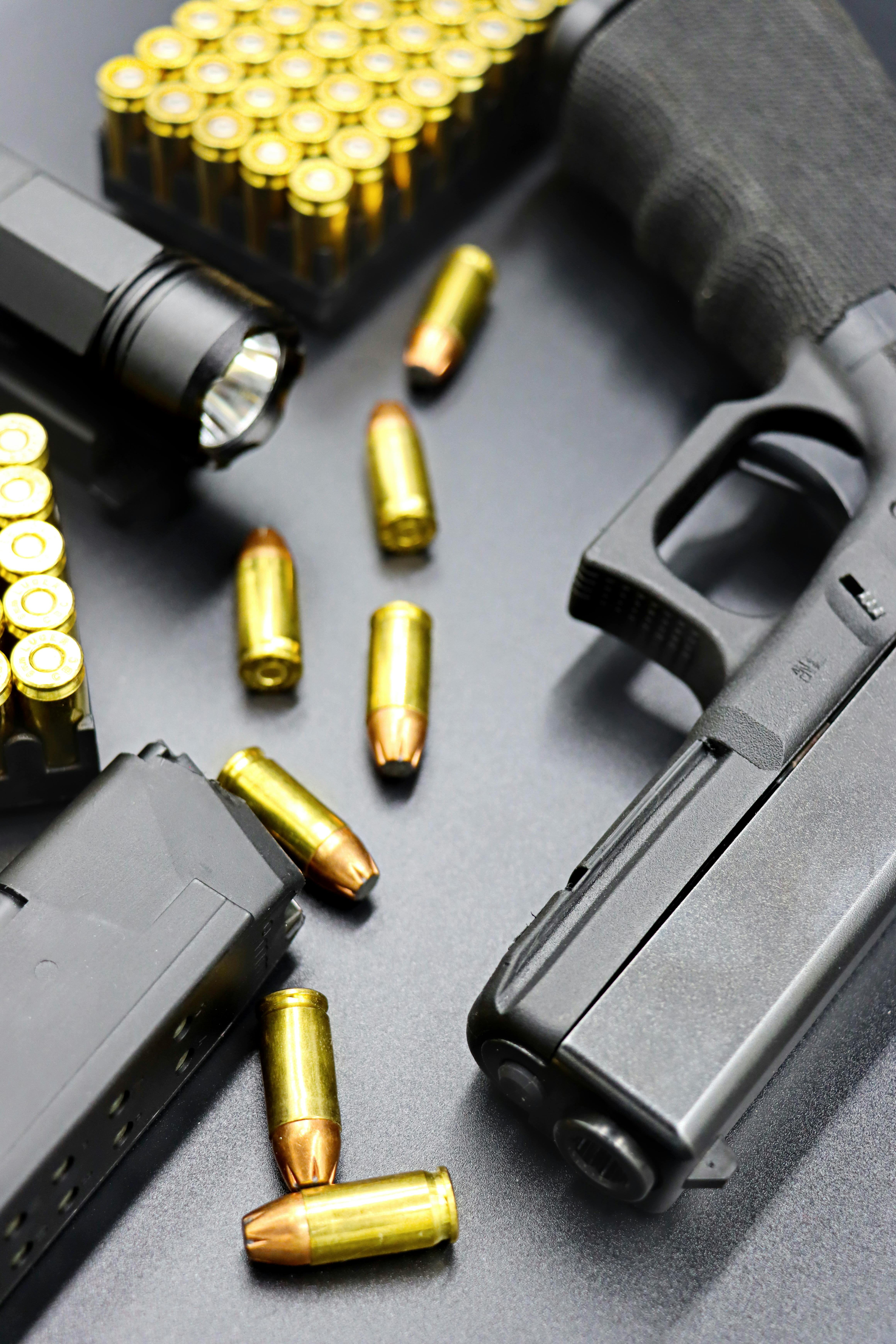
Firearms and weapons cases in Maryland often raise questions about possession, vehicle searches, traffic stops, permits, forensic evidence, and whether a weapon was lawfully seized. The answers depend on the particular charge and the circumstances under which the firearm or other weapon was discovered.
Common Questions About Firearms and Weapons Charges in Maryland
The penalties depend on the circumstances and the defendant's prior record. Under Maryland Criminal Law § 4-203, a first offense can carry up to five years of incarceration and a fine of up to $2,500, with statutory minimum penalties applying in certain circumstances. Prior qualifying weapons convictions can substantially increase the potential sentence.
But the penalty is only one part of the analysis. The defense should first determine whether § 4-203 actually prohibited the particular possession or transportation, whether a statutory exception applies, whether the State can prove knowing possession or transportation, and whether the handgun was lawfully discovered and seized.
What is the penalty for illegally carrying or transporting a handgun in Maryland?
Yes. Ownership and possession are not the same thing. The State may attempt to prove that a defendant actually or constructively possessed a firearm even when the gun belonged to someone else.
Constructive possession depends on the facts connecting the defendant to the firearm. When a gun is recovered from a vehicle, residence, bag, or other shared location, the defense should examine the defendant's knowledge of the weapon, proximity and access to it, who exercised control over the location where it was found, and whether other people had equal or greater access to the firearm.
Mere presence near a firearm does not automatically establish possession. The State must prove the required connection between the defendant and the weapon beyond a reasonable doubt.
Can I be charged with a weapons offense if the gun was not mine?
Yes. A firearm is evidence, and the fact that police ultimately found a gun does not retroactively make the stop, detention, frisk, or search lawful. The defense may challenge how police encountered the defendant, what legal basis existed for the seizure, and whether officers exceeded the lawful scope of a frisk or search.
In a vehicle or container case, the analysis may include the justification for the traffic stop, whether the detention was unlawfully prolonged, whether officers had reasonable suspicion or probable cause, whether consent was voluntary, and whether police had lawful authority to open a bag or other container.
If a firearm was obtained through a Fourth Amendment violation, the defense may seek suppression of the weapon and evidence derived from the unlawful police conduct. Whether suppression is ultimately required depends on the particular facts and any applicable exception to the exclusionary rule.
Can a firearm be suppressed if police found it during an illegal search?
Yes. Certain criminal convictions can prohibit a person from possessing firearms in Maryland, but not every criminal or weapons conviction produces the same result. Whether a person becomes prohibited depends on the particular offense, the disposition, and other circumstances.
Maryland law generally prohibits firearm possession after conviction of a “disqualifying crime,” which includes crimes of violence, felonies, and certain misdemeanors carrying a statutory maximum penalty of more than two years. Maryland law also contains additional firearm restrictions based on particular prior convictions.
Because the collateral firearm consequence can sometimes be as important as the sentence in the criminal case, the effect on future firearm possession should be considered before a plea or other disposition is entered.
Can a criminal conviction affect my right to possess a firearm in Maryland?
Not necessarily. The possession of a firearm does not, by itself, automatically establish that a crime is being committed or give police unlimited authority to stop and search a person. The legality of the encounter depends on the facts known to the officers and whether those facts provided the constitutionally required justification for the particular detention, frisk, or search.
In a firearms case, the defense should examine what information police had before the seizure occurred—not what they discovered afterward. An officer's later discovery of an unlawfully possessed firearm cannot itself supply the justification that was required before the stop or search.
The analysis may include whether officers had reasonable suspicion of criminal activity, whether there was a lawful basis to believe the person was armed and dangerous for purposes of a frisk, and whether any subsequent search remained within constitutional limits.
Can police stop or search me simply because they believe I have a firearm?
This office handles weapons cases throughout Anne Arundel County and provides aggressive criminal defense focused on protecting your rights and your future. Contact this office to discuss your case and the available options.